Showing posts with label wild flowers. Show all posts

Friday, July 7, 2023

Spring and a Bit of Summer


 We had a wonderfully cool May and June.  Rarely got above 70 degrees.  Many days the Marine Layer was hugging the mountains and engulfing the valley.  
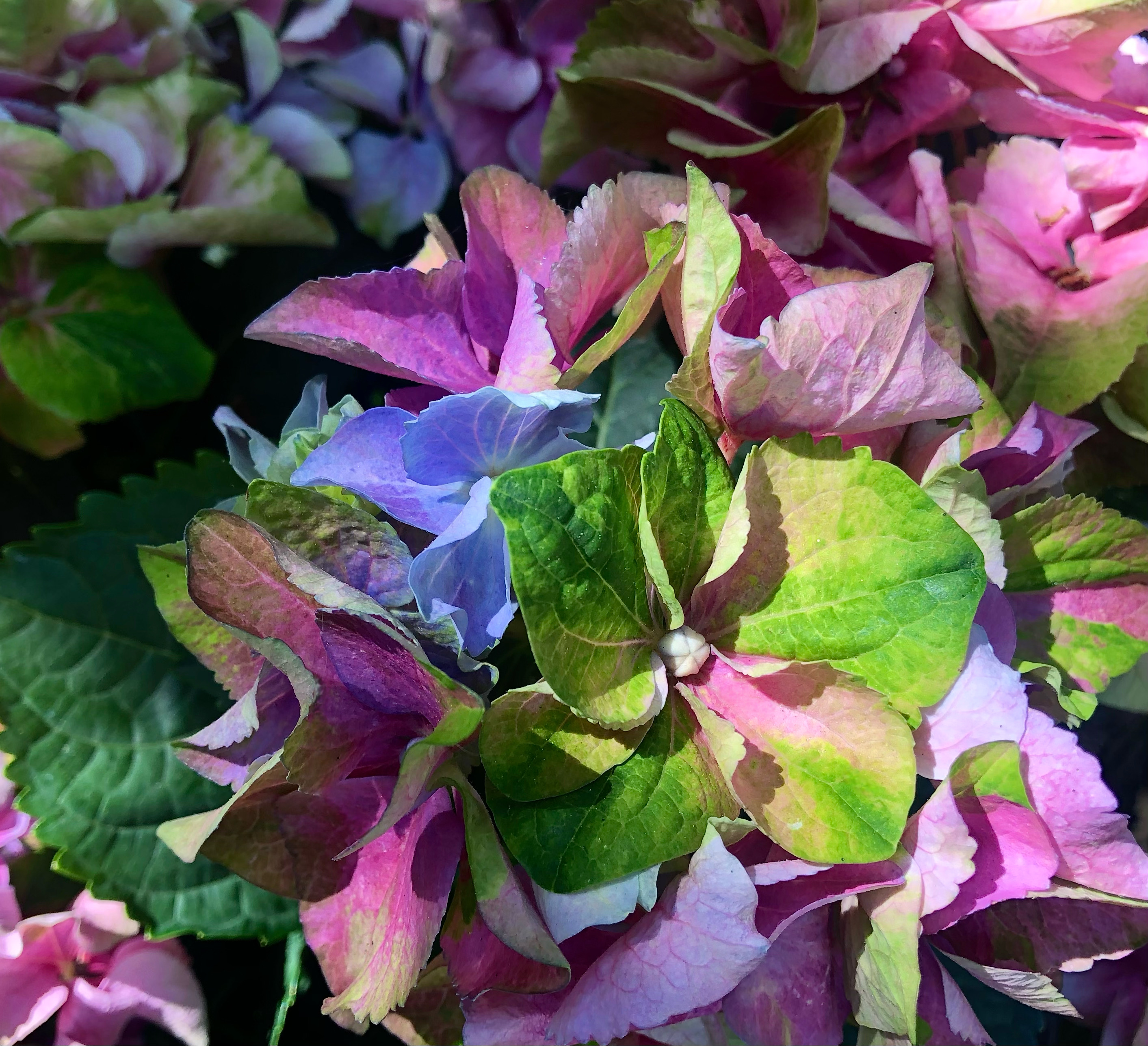
I bought a new hydrangea called Mysterious.  It’s a mystery to me how it has so many different colors.  Just gorgeous.  


Wild flower season is well underway.  Wild Sweet Peas in the top photo, Seep Monkey Flower in the bottom photo.  


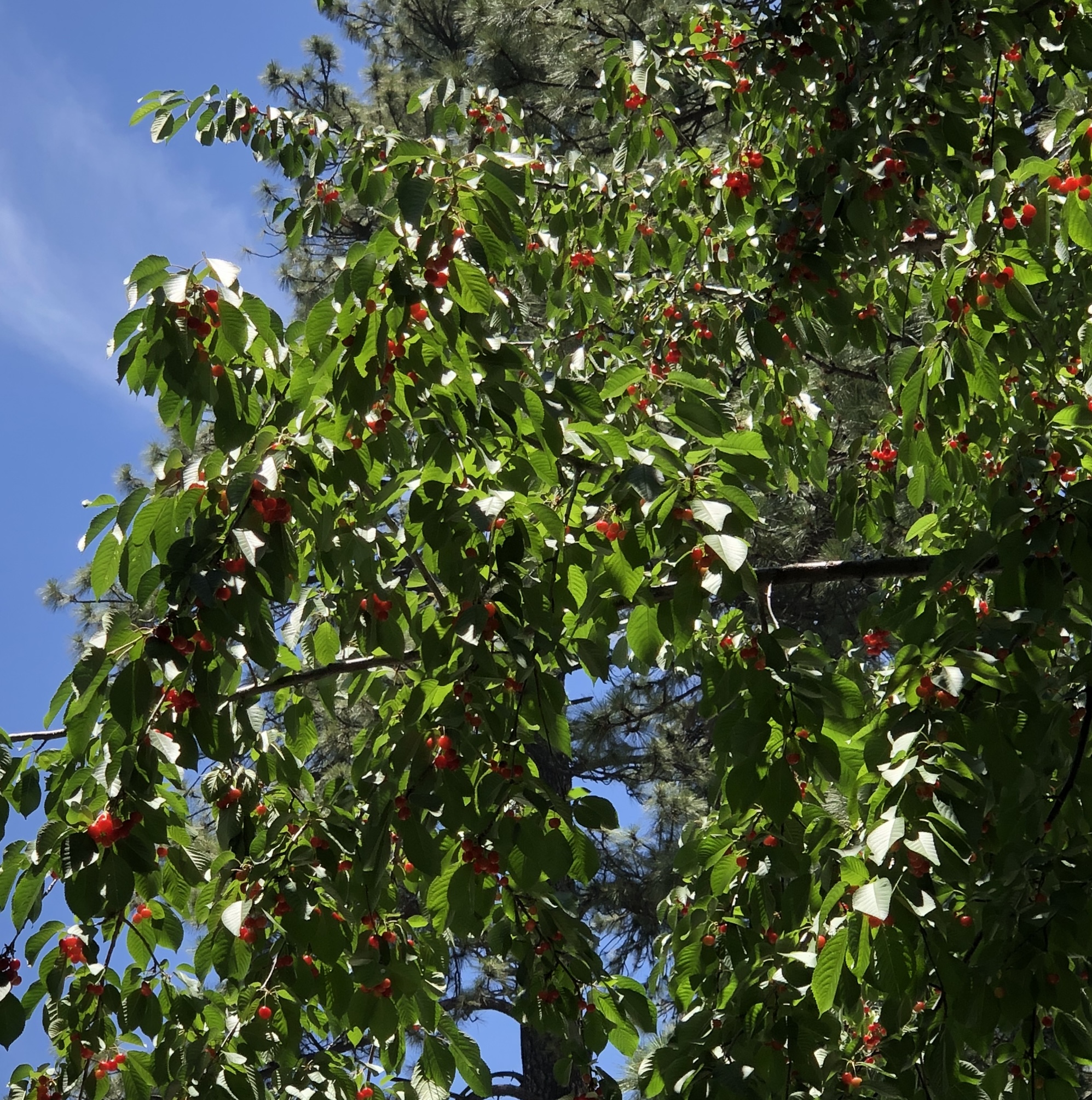
My cherry trees are loaded this year.  For some reason, the birds are leaving quite a few cherries for me!  

The lake is looking particularly beautiful since it’s so full from all the snow last winter.  

The forest is wonderfully green, too, although the July heat is turning the grasses to gold pretty quickly now.  

Sylvia Squirrel getting a drink from the birdbath.  How squirrels manage to drink while upside down is a mystery to me.  

Thursday, July 27, 2017

Wednesday Around Here

It's almost August and thistles are blooming... 
Thunderheads are dotting the sky here and there.  Mostly there, as in way to the east over Big Bear. 
The elderberries are ripening fast, almost ready to pick. 
I wish some of the rain clouds would rain on us... 
But they keep their distance, eventually disappearing behind the haze of smog that fills the San Bernardino valley this time of year.


If you want to see more of what Wednesday looks like around the world, click here 


And...I just realized it's Thursday!  Oh, well...

Friday, June 16, 2017

Favorites

These are one of my favorite wildflowers, and they're blooming all over these mountains right now.
Splendid Gilia (Saltugilia splendens) is a member of the phlox family; this particular species is only found in Southern California, growing in the transverse and coastal mountain ranges. 
The flowers are tiny, about the size of a dime, but strikingly beautiful. 
Other common names are woodland gilia and Grinnell's gilia.  They don't make good bouquets, as they wilt after a couple of hours, so I content myself with just taking photos of them.

Linking with: Floral Friday

Friday, June 9, 2017

Blue Sky and Sweet Scents

This patch of wild sweet peas by Highway 18 in Sky Forest blooms reliably every year.  I always try to make sure I get a photo of them.  I've tried to get them to grow by my house, but I think I get too much shade.  You can find them all over up here in early summer, and the scent is wonderful! 

Linking with: Skywatch Friday

Tuesday, May 23, 2017

Wildflowers and Water

Water flowing in a little creek near Lake Silverwood... 
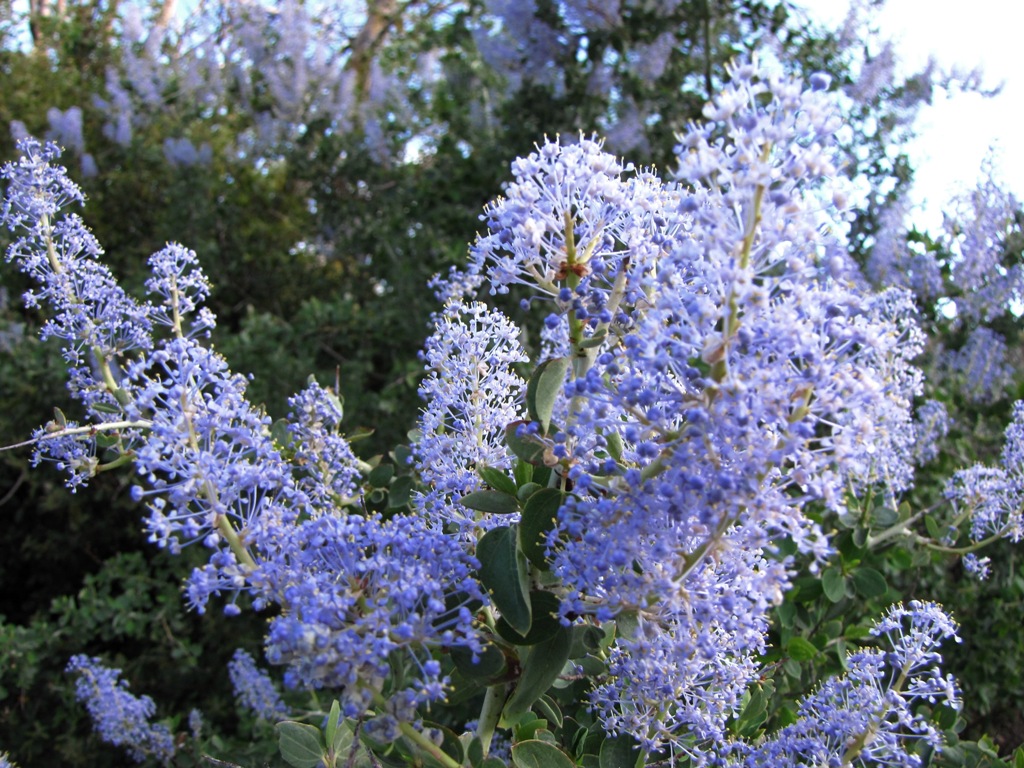
...and some wildflowers growing on the creek banks, or very near the banks.  This is Ceanothus,
commonly called California Mountain Lilac.  It doesn't smell like real lilacs, but it does have a lovely, sweet scent that reminds me of honey. 
Yellow California poppies.  They're usually orange. 
These pretty little flowers are Phacelia, a member of the waterleaf family.  It's native to California, Nevada and Oregon.
And lots of wild mustard...I don't think there is anywhere that this plant doesn't grow.  It even grows above the arctic circle. 
Further down, the creek picks up speed before finally flowing into Lake Silverwood (pictured below). 
 

To see more of what Tuesday looks like around the world, click on the link: Our World Tuesday

Monday, September 19, 2016

Shooting Stars

This is Western Columbine (Aquilegia formosa), a California native that's found all over western North America.  It has lots of common names: shooting star, crimson columbine and Sitka star are a few.
It's easy to grow in partial shade to full sun, as long as you're not trying to grow it in clay soil.  It likes consistently moist soil, as on the banks of a stream or a seeping spring.  I've had good luck growing it in pots, too.

Linking with: Through My Lens

                    Macro Monday 2

                    Monday Mellow Yellows

Friday, August 19, 2016

Skies and Flowers

Monsoon rains are falling out over the Mojave desert to the southeast of us, but nothing here.  It hasn't rained since April, and that wasn't enough to even measure.
To the east and north of us, the Blue Cut fire still rages unchecked.  (Lake Gregory is a tiny, light blue smudge just above the center, and to the left, of the photo, about 10 o'clock) and Lake Arrowhead is the large lake.  (Photo from Rim of the World, by R. Lagler).  At the latest count, 96 homes have burned.  This monster of a fire moved so fast (10,000 acres burned in the first four hours) there was nothing anyone could have done to stop it.  Right now, the area burned totals over 31,000 acres.  No human lives were lost, but who knows how many precious animal lives were lost...I grieve for those little lives, and for the people and animals who lost their homes.
This is what the smoke looked like from Lake Gregory in the valley where I live. (Photo from Rim of the World, by M. Jordan).  The Pilot fire, just over the ridge from this valley is still burning, but it's fully contained and nearly out, thank God.
Near the base of the tree in the first photo I found a little Hoary Tanaster (Machaeranthera canescens) blooming.  They usually don't bloom until the middle of September, and are hardy wildflowers common in the San Bernardino mountains. 
I'm linking with:  Skywatch Friday
                         
                         Flower Friday
                         Floral Friday

Please click the above links to see many beautiful photos!

Saturday, February 6, 2016

Pink Saturday

Little flowers of Fremont's Bush Mallow (Malacothamus fremontii) that I found growing down around Cleghorn Canyon.  It's a liminal sort of place, not really a part of the mountains but not really desert.  It's so quiet there, especially winter afternoons. 

Linking with Pink Saturday

Tuesday, August 25, 2015

Blooming Today

Wild California Buckwheat (Eriogonum fasciculatum).  Many Native Americans used to use various parts of the plant to treat headaches, diarrhea, wounds and sore throats. Some still do...
Firecracker Penstemon (Penstemon eatonii) also grows wild in all southwestern desert "sky islands."  Hummingbirds love it, and it's also grown commercially.  It needs really good drainage and not too much water in the summer.

Saturday, January 10, 2015

Whispers

In Spring, Summer and Autumn, it's easy to find beautiful things to photograph.  It seems as though they're shouting at me from everywhere.

But in Winter, I have to look carefully, listen intently.  Because, in Winter, beauty whispers.

Tuesday, September 2, 2014

Bee Appreciation


I'm always happy to see bees!  Or, even one bee.  There were lots of other bees around but they didn't want their photo taken...

Sunday, August 10, 2014

Sunday Sunlight...


In the form of a sunflower (Helianthus annuus).  Like a lot of other flowers, those showy petals around the center aren't really the flower; the real flowers are the tiny florets found in the center of the ray petals.  They're native to North America and weren't brought to Europe until the 16th century.  It's a myth that they follow the sun; only the immature buds do that.  I always loved it when I would look at a field of sunflowers which were facing all different directions.  Rebel sunflowers!  Non-conformist, free-thinking sunflowers! I finally looked it up and was a little disappointed when I found out that they weren't really rebels...

They do have a bit of a dark side, too.  Sunflowers release a toxin that suppresses the growth of plants near them.  Killer sunflowers, who knew?  Fortunately for that ladybug though, sunflowers love ladybugs...and bees, butterflies, birds, animals...everyone, I guess, except other plants who would steal their nutrients and ladies wearing large hats who approach them with scissors.  I distinctly heard one say to a friend, who was intending to cut some of its flowers, "Get away from me, horrible woman!"  No really, I did.  I think she heard it too, because she abruptly turned to me and said crossly, "Well, if you didn't want me to pick any sunflowers, you should have said so before!"  She still doesn't believe that it was the sunflower who said that, but thinks it was me, can you imagine?  My voice doesn't sound anything like the voices of sunflowers!

Tuesday, July 29, 2014

Tigers Like These Mountains


Usually these Humboldt Lilies (Lilium humboldtii spp ocellatum), commonly called Tiger Lilies, are done blooming by this time of year.  I found these today in a very shaded area in the middle of some cedar and dogwood trees.  They're native to Southern California mountains and foothills.  Once considered invasive, now they're on the endangered list, mostly due to loss of habitat.  I'm always surprised when I see these flowers in this forest because they look so exotic and tropical.  But California is the only place in the world where this species naturally occurs!

It's interesting how these flowers propagate themselves.  They grow from bulbs, but they make those bulbs from little seeds.  In the fall the seed must land on exactly the right spot in the soil where it can burrow in and rest over the winter.  If there is enough winter rain, the seed makes a microscopic bulb and sends up one small green shoot that looks like a blade of grass.  It takes about five to six years for the bulb to get big enough to produce flowers.  I found an online nursery, Las Pilitas, that sells the bulbs.  They're out now, but I'm going to check back next spring to see if they have some for sale.  Here's hoping...

Monday, June 23, 2014

A Quote for Monday


"A flower's appeal is in its contradictions; so delicate in form yet so strong in fragrance, so small in size, yet big in beauty, so short in life yet long on effect."  Adabella Ridici 

These are tiny little wildflowers that bloom all over the roadsides in great masses up here in June.  Their blooms are minuscule, usually no bigger than one quarter of an inch in diameter.  But, up close, oh!  Splendid Gilia really deserves its name.

Wednesday, May 21, 2014

Wednesday's Winding Road


Wild sweet peas blooming beside Highway 18, also called Rim of the World Highway.  I took this last June.  The sweet peas have the most delicious fragrance.

Last night and today were such a welcome relief.  It was cool and cloudy during the day and the temperature got down to 38 F last night.  It even sprinkled a little last night...a very, very little, but still appreciated!

Saturday, August 17, 2013

On the Wild Side


I found a little wild rose blooming in a sunny spot in the forest today.   Stepping out of the shade of thick pines and cedars and finding something like this is pure magic to me...forest magic and earth magic working together to create a gift.  A visual gift for me but, when fall arrives, the rosehips will be a gift of food for the animals and birds.

Thursday, July 25, 2013

Forest Magic

 
'Humboldt Lily' is the actual name of this flower, but they always remind me of the treasure of some fabulous Faery Queen, especially when I come across one deep in the woods like this one.  As I pushed aside thick cedar branches, I saw this lily dancing in the breeze, looking as though it was placed there on purpose as a lantern to brighten up the green shadows and lend some sparkles to the water.  I could swear I saw a glow coming from it when, a little way down the narrow path that only I and the forest animals use, I turned to look back at it.  A bit of forest magic on a mundane day...

Thursday, July 18, 2013

Amazing Little Creatures


There are actually two bees in this photo; the one in the center is easily visible (well, if you left click to enlarge the photo) and there's another one tucked into the wild lupin blossoms on the upper right of the photo. 


The photo above is blurry (sorry), but if you look closely you can see the little 'tongues' of the happy bees getting a drink.  I think honey bees have such cute faces.  They're such amazing creatures; only the Queen bee can sting without dying and she also chooses if the egg she lays will be a female or a male.  The male bees are only used as . . . ummm . . . sperm donors.  The males choose a site where they meet up with Queens from neighboring hives and mate.  The poor little males aren't allowed to remain in the hive during the winter, but forced out to die.  I think this is taking feminism a tad too far!  But, I'm not a queen bee and she probably has good reasons; however I can't remember what they are right now.  Anyway, the daughter bees keep the hive very tidy at all times, going outside no matter the weather to defecate, cleaning old wax and such from the hive, warming the hive in the winter by trembling their wings, cooling it in summer by fanning their wings and sprinkling it with water.  All the daughter bees start out as nursemaids, then progress to cleaners and foragers.  Bees navigate by the sun and perform intricate dances to tell the other forager bees exactly how to get to the flowers and back to the hive.  You can read more about these awe inspiring creatures at:

http://science.howstuffworks.com/zoology/bee.htm


Related Posts with Thumbnails